
Back to blog
artificial intelligenceAI daily lifeautomationinnovationtechnologyconsumer AI
Artificial Intelligence: Transforming Our Daily Habits
May 28, 2026TECHNÉA CONCEPT
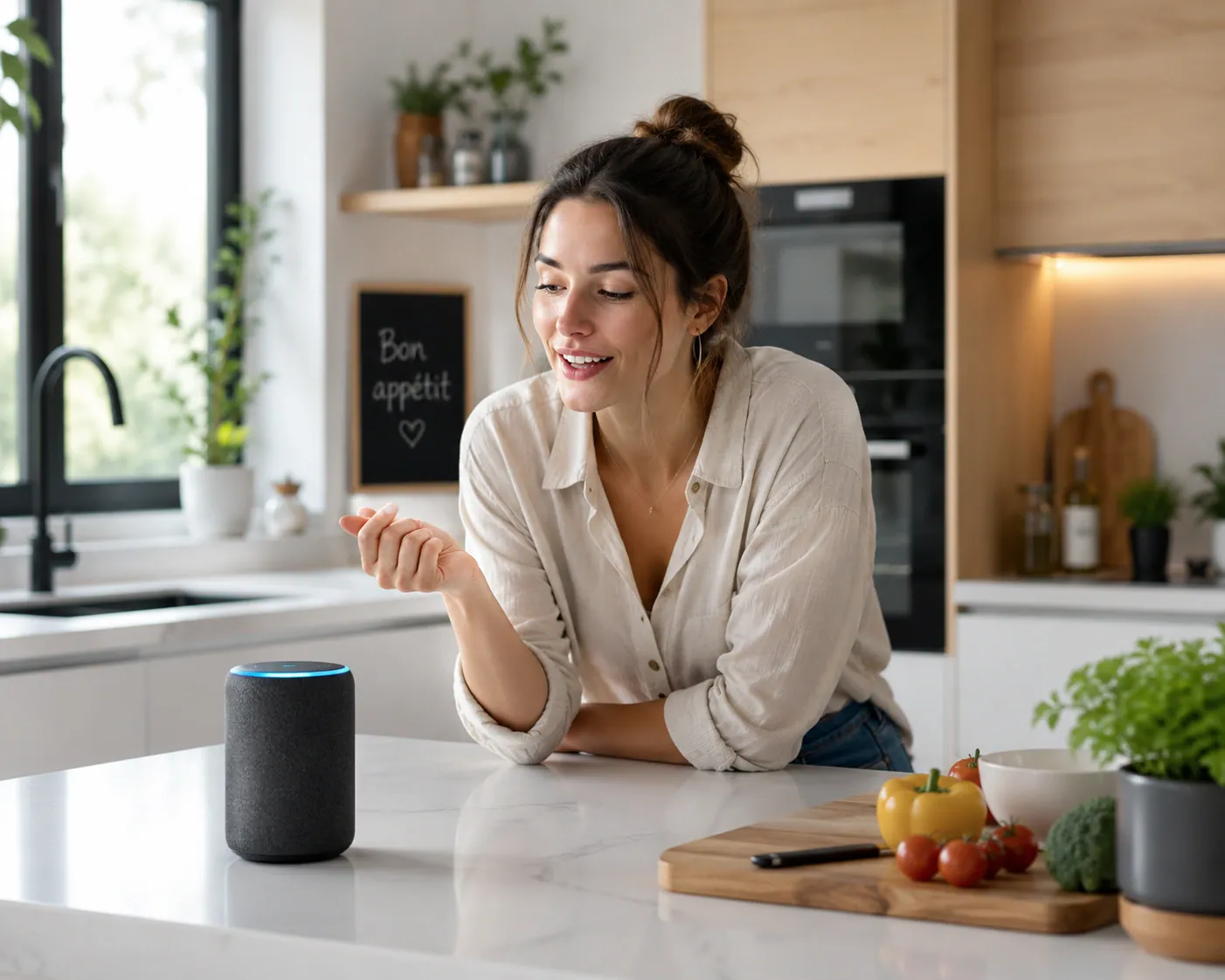
This morning, your alarm chose the ideal moment in your sleep cycle. Your voice assistant adjusted the thermostat before you even set foot on the floor. And on your commute, an app routed you around traffic without you having to check a map.
Artificial intelligence is no longer a futuristic promise. It is here, discreet, woven into the most ordinary moments of our day. Yet most of us use it without truly understanding how it works — or realizing the full scope of its impact.
This article offers a complete overview: how AI is transforming our habits, what technologies lie behind it, and what this means for us.
When we talk about AI in daily life, we rarely mention complex algorithms or neural networks. We talk about an app that recognizes faces in a photo, a search engine that understands what we really mean, or a playlist that seems to read our mind.
These services all work on the same principle: a model trained on massive amounts of data learns to recognize patterns, then applies this learning to new situations. The more data the model receives, the more accurate its predictions become. This is called machine learning.
The fundamental difference from traditional software is that AI is not programmed with explicit rules. No one wrote code saying "if the user likes jazz and it is 8 PM, suggest this track." The model discovered this pattern on its own by analyzing millions of listening sessions.
Take a concrete example. When you use Google Search, the engine does not simply look for keywords. It analyzes your query, takes into account your location, your search history, the language you are using, and even the device you are searching from. It cross-references all this information in milliseconds to deliver the most relevant results. This level of personalization, which we now take for granted, relies on years of training on billions of queries.
Consumer AI relies on three invisible but essential steps.
Data collection is the first. Every search, every click, every word spoken to a voice assistant is data that feeds the model. This data is anonymized, aggregated, and used to improve predictions. The larger the data volume, the more finely the model can detect correlations. For example, a music streaming service does not just analyze the genres you listen to: it examines what time of day you listen to each type of music, how long you listen, which tracks you skip, and which ones you replay.
Model training is the second step. From millions of examples, the model adjusts its internal parameters to minimize errors. A Netflix recommendation model has been trained on billions of hours of viewing to learn which movies will appeal to which user profile. This training can last weeks on specialized servers, consuming as much electricity as a small town. Once trained, the model is deployed on inference servers capable of handling millions of simultaneous requests.
Real-time inference is the third step. When you type a Google search, the model analyzes your query and produces a response in milliseconds. This speed is crucial: a latency of more than 300 milliseconds in a voice assistant would break the natural flow of conversation. Tech giants invest heavily in infrastructure to enable this real-time capability, with data centers distributed worldwide to serve each user from the nearest server.
Several AI technologies are at work in our daily lives, often in combination.
Natural Language Processing (NLP) enables voice assistants to understand what you say, even with an accent, background noise, or incomplete sentences. Modern models like GPT or Claude do not just recognize words: they understand context, intent, and even the emotion behind a phrase. When you dictate a message to your phone, NLP transcribes it, but can also detect if you are in a hurry or hesitant. This technology has made dramatic progress: ten years ago, dictation software made a mistake every five words. Today, the error rate is below one in twenty under normal conditions.
Computer vision is what allows your photo app to find all pictures of a specific person without you having tagged them manually. It is also behind your smartphone's facial unlock, license plate reading in automated parking lots, and fall detection on some smartwatches. Modern vision models can identify not only objects, but also actions, facial emotions, and even environmental states (a wet road, a messy room). These capabilities were science fiction just five years ago.
Recommendation systems are the invisible engines of our digital lives. Netflix, Spotify, YouTube, Amazon, TikTok — all use algorithms that analyze your past behavior to predict what you will like next. These systems are so effective that they influence up to 80% of content consumed on these platforms. Their effectiveness relies on a virtuous loop: the more you use the platform, the more the system learns about you, the better its recommendations become, the longer you stay. This loop is both their strength and their main subject of criticism.
Speech recognition and synthesis combine NLP and audio processing to enable natural interaction with our devices. When you ask Alexa "what is the weather tomorrow?", the system must first capture your voice, clean it from background noise, transcribe it to text, understand the question's intent, query a weather API, formulate a textual response, then synthesize a natural-sounding spoken answer. Each step involves a different AI model, and the entire chain must execute in under one second for the interaction to remain fluid.
Your smartwatch analyzes your sleep cycles and wakes you during a light phase, avoiding that groggy feeling. During breakfast, your voice assistant reads the news headlines, adjusts the heating, and adds milk to your shopping list — all in response to natural voice commands. Your weather app's algorithms cross-reference satellite data, ground readings, and historical models to deliver hourly accurate forecasts.
Google Maps or Waze analyze real-time traffic data, incidents reported by other drivers, and even scheduled events in the area to calculate the optimal route. This is not simple mapping: it is a predictive model that anticipates traffic evolution over the duration of your trip. If you are leaving in twenty minutes, the app recalculates because it knows traffic conditions will have changed.
AI is everywhere in your professional tools. Your email inbox suggests relevant automatic replies. Your calendar detects free slots for scheduling meetings without endless back-and-forth. Office suites correct your grammar, rephrase your sentences, and generate summaries of long documents. In creative fields, image and text generation tools allow professionals to produce first drafts in minutes, freeing time for strategic thinking and creative refinement.
Streaming platforms recommend movies and music with sometimes uncanny accuracy. Photo apps recognize faces, locations, and even emotions to automatically organize your library. Video games adjust their difficulty in real time based on your skill level. Social networks build a unique news feed for each user, selecting the posts most likely to capture their attention.
Smartwatches detect atrial fibrillation before the first symptom appears. Sleep apps analyze your cycles and suggest optimal bedtime schedules. Some devices measure your blood oxygen saturation, stress levels, and physical activity, building a continuous health dashboard. These tools do not replace a doctor, but they provide valuable longitudinal data that healthcare professionals can use for more precise monitoring.
The first benefit is time saved. A search that took five minutes would have taken thirty with the tools of ten years ago. Automation of repetitive tasks (email sorting, data entry, scheduling) frees up hours every week. According to a McKinsey study, professionals still spend 60% of their time on tasks that AI can now assist or automate.
Personalization is the second major advantage. The services we use adapt to our preferences, habits, and pace. This personalization significantly improves the user experience, making every interaction more relevant. It is no longer a luxury: it has become an implicit expectation.
Accessibility is an often underestimated benefit. Speech synthesis allows visually impaired people to access written information. Voice recognition helps people with reduced mobility interact with their devices. Automatic translation breaks down language barriers in real time. For millions of people, AI is not a convenience: it is a gateway to independence.
Privacy is the most immediate concern. Every interaction with an AI service generates data that is stored, analyzed, and sometimes sold. Voice assistants record fragments of private conversations. Health tracking apps know your most intimate biometric data. The question of consent and transparency remains largely open. The General Data Protection Regulation (GDPR) in Europe has established a framework, but its enforcement remains uneven, bypassed by practices such as cross-site tracking and obscure license agreements.
Dependency on recommendations is a less discussed side effect. Algorithms designed to maximize time spent on a platform create engagement loops that can trap users in a bubble of similar content, reducing the diversity of information and opinions they are exposed to. This phenomenon, sometimes called the "filter bubble," has social and democratic implications that go far beyond technology.
Variable quality is a practical limitation. Voice recognition that struggles with regional accents, automatic translation that fails on idiomatic expressions, an assistant that misunderstands a perfectly clear query — these imperfections remind us that AI is not infallible. Over-reliance on these systems is a risk: trusting an important decision to an erroneous LLM response can have real consequences.
Everyday AI will continue to integrate more deeply into our lives. Several trends are emerging.
Proactive AI: instead of waiting for our commands, systems will anticipate our needs. Your refrigerator will order milk before you run out. Your thermostat will learn your schedule to optimize heating without you having to program it. This evolution will transform AI from a reactive tool into an anticipatory environment.
On-device AI: more and more processing will happen directly on your devices rather than in the cloud, improving privacy and responsiveness. Recent smartphone processors already include dedicated AI compute units (Neural Engine). This shift toward local processing reduces network dependency and ensures that certain data never leaves your device.
Conversational AI: voice and text interfaces will become more natural, enabling fluid exchanges where you can change topics, ask follow-up questions, and be understood even with imprecise phrasing. The boundary between human conversation and interaction with an AI assistant will become increasingly difficult to distinguish.
Regulation will likely intensify. The European Union's AI Act, discussions about algorithmic transparency, and the right to explanation of automated decisions are shaping a framework where AI must be both performant and responsible. Companies developing these technologies will need to adapt to growing control and compliance requirements.
Artificial intelligence has already transformed our habits more deeply than we realize. It is in our pocket, in our living room, in our car — not as a technology we deliberately use, but as an environment we navigate.
The challenge is no longer whether AI will change our lives. It already has. The question is how we want to steer it: what data we are willing to share, how much automation we want to entrust with our choices, and how to ensure these systems remain at the service of humans rather than the other way around.
Tomorrow's AI will be what we make of it. Not what the technology allows.